Home / Compare live dealer tables by rules, records and account context
Independent guide · 2026-11-25
Compare live dealer tables by rules, records and account context
 Partner offers · Country: United KingdomUpdated 24 November 2026


7Gear · Welcome bonus£3,000 welcome bonus on your deposit
Reviews (8,590)
5.0Rating


A live dealer lobby can show dozens of tables while giving little context about the rule differences that matter. A blackjack table may change decks, dealer action or payouts; roulette can use another wheel layout; baccarat and casino-poker variants can change commission, qualification or side-bet paytables.
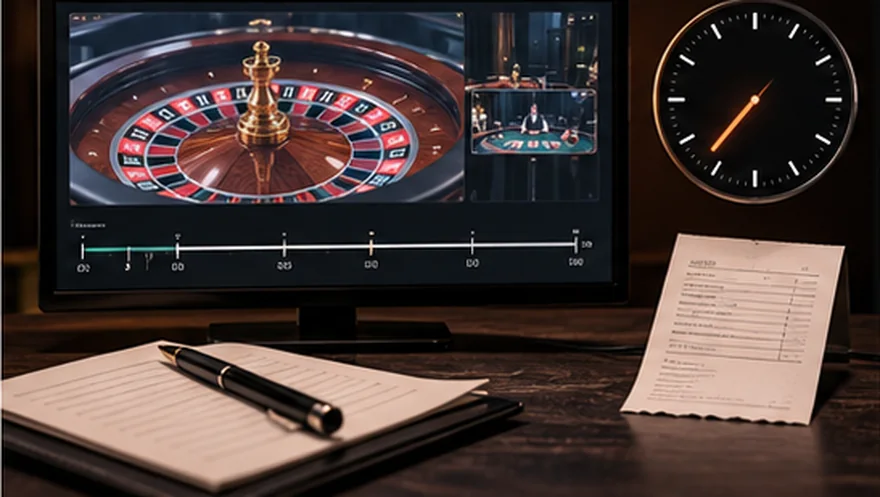
This checklist starts with the account operator, studio and exact table rather than counting thumbnails. Every limit is tied to currency, account and observation time. The game-information panel supplies the working rule set, while a generic strategy page is treated only as background. Stream clarity, interface language and accessibility are reviewed separately from fairness. When a result is questioned, the useful file contains the accepted wager, round identifier, rule version and ledger movement, not merely a video screenshot. Payment methods and promotions remain operator-level questions outside the studio. No player count, table range, authority status or completion time is invented. A person who has self-excluded should not use table comparisons to reopen access. Other readers can use the matrix to identify a suitable rule set within an existing budget or reject a site where the operator, record or control cannot be verified.
Connect the table to the accountable operator
Write down casino domain, legal operator, studio, provider, table identifier and account currency. Do not place the presenter or software brand in the operator field.
Verify any authority claim against the current record for the exact entity and domain. A studio relationship cannot establish the casino's regulatory position.
Keep registration, balance, verification and complaint duties attached to the account contract unless reliable terms assign them elsewhere.
The operator sequence on not on GamStop should pass before a table's language, style or schedule affects the decision.
Create a reproducible table inventory
Capture table name, game family, provider, language, currency, displayed limit and observation time. Count only tables that the reviewed account can actually open.
Separate standard tables, speed formats, game shows, dedicated rooms and variants. A lobby total can include multiple stakes or language versions of the same underlying rules.
Do not advertise continuous availability from one visit. Studios can open, close or change tables by session and account context.
Repeat the snapshot only where schedule matters, and retain each dated view rather than averaging it into a permanent inventory.
Read roulette from the wheel and paytable
Identify the wheel layout, number of zero pockets and treatment of even-money bets when zero occurs. Record straight and grouped payouts from the table source.
Racetrack and neighbour interfaces are ways to place combinations; they do not replace the underlying wheel evidence. Preserve the selected bet and round record.
Do not present hot numbers, history boards or visible streaks as predictive tools. Past independent outcomes cannot change the payout rule.
Special roulette variants with multipliers or additional stages need their own rules. A familiar wheel graphic does not establish an identical return structure.
Compare blackjack through decision rules
Record deck count, dealer action on soft totals, doubling, splitting, resplitting, surrender, insurance and natural-blackjack payout where published.
Check whether split aces and dealer blackjack checks receive special treatment. A strategy chart built for another configuration can recommend different actions.
Side wagers require a separate paytable and stake record. Do not merge their cost with the main hand.
The table minimum must fit the pre-set session plan without forcing a larger total exposure. If the available rule set and stake do not fit, leave rather than adapting the budget.
Compare a live table from its rule panel
A live dealer casino comparison in the UK needs the table name, provider, rules and limits. A stream quality test alone cannot establish those details. Check whether the displayed minimum covers the main bet only and whether optional bets have separate minimums and settlement rules.
In a casino live app, confirm that the rules panel remains readable while the stream runs. Inspect the account history after a round and identify how an interrupted connection is handled in the published rules. A fast video feed and a fast withdrawal are separate features; neither should be inferred from the other.
Separate baccarat and live casino poker
For baccarat, note banker commission or alternative payout, tie treatment and each side-bet table. Similar labels can hide materially different rules.
For casino poker, preserve dealer qualification, ante, raise options and paytable. The player competes against house rules rather than other poker users.
Do not borrow cash-game rake or tournament terminology for a house-banked live table. The cost evidence comes from the casino paytable.
Progressive contributions or jackpot side features remain separate fields. An advertised top prize does not establish probability or current funding.
Review language and interface access
Record presenter language, written interface language, rule availability, audio controls and any captions or visual prompts. A translated lobby can still open another-language tables.
Essential decisions and rules should be understandable without relying on informal presenter explanation. Chat is not a substitute for the published paytable.
Check mobile and desktop layouts for hidden buttons, clipped limits or delayed confirmations. Record the device only as context, not as proof of operator quality.
Never share account or payment information in public table chat. Use the verified operator support route for account questions.
Document interruptions through round evidence
Preserve table identifier, round number, accepted wager, timestamp, displayed result and account ledger. Note the connection event without assuming its cause.
A delayed stream, frozen presenter or late animation does not prove that the stored result changed. Ask for the underlying game record.
Do not place another wager while the first round or balance remains unresolved. Additional play can make the timeline harder to isolate.
Keep original screenshots and exports unchanged. Add annotations in a separate index and redact credentials before sharing.
Keep bonuses and cashier routes outside the table
Live-game contribution, maximum stakes and excluded tables come from the current promotion terms. Studio or table branding does not decide campaign treatment.
The page on non-GamStop casino bonuses archives the complete rule set and ordinary cash alternative.
Likewise, deposit and payout methods belong to the operator cashier. A working live game never proves which provider can receive a withdrawal.
Use the withdrawal evidence page for request, review, dispatch and receipt records.
Design a stop rule for rapid tables
Set cash, time and wager-count limits before opening the game. Count side bets and repeated low stakes in the same total.
Use reminders, timeouts and external payment friction when the continuous sequence makes stopping difficult. Do not increase stakes after losses to shorten a session.
The ad-free limits page belongs ahead of table selection for anyone experiencing harm.
Stop when the rule source disappears, a round is unresolved, the connection obscures decisions or the planned boundary is reached. Presenter encouragement never changes that decision.
| Area | Evidence | Misleading shortcut |
|---|---|---|
| Ownership | Operator contract and studio name | Presenter is the operator |
| Variant | Exact table rules and paytable | Game name is sufficient |
| Limits | Currency, table and timestamp | Lobby range applies everywhere |
| Interface | Language and decision controls | Visual polish proves fairness |
| Round | ID, accepted bet and ledger | Video frame is the complete record |
| Control | Pre-set cash and time boundary | Fast table needs faster staking |
Questions & answers
How can I compare live dealer tables fairly?
Use the exact rule sheet, limit, currency, table identifier and observation time.
Do not compare only thumbnails or presenter style.
Keep the operator and studio in different fields, then reproduce the relevant decision rules. A dated table record is more useful than a lobby total with no account context.
Include language and device where they affect access. Recheck any table whose rules or limits change rather than blending observations from different sessions.
Preserve each source independently.
Are all live blackjack tables the same?
No. Decks, dealer actions, player options and payouts can differ.
Record the configuration before using any strategy reference.
Natural-blackjack payout, splitting and doubling conditions deserve separate fields. A strategy chart built for another combination can give unsuitable decisions for the reviewed table.
Side bets also have independent paytables and should not be included in a main-hand return figure.
Can roulette history predict the next spin?
Past independent results do not change the wheel or payout rule.
History displays should not be treated as predictive evidence.
Identify the wheel and zero treatment instead. A recent sequence can be recorded as game history, but it cannot establish what number is due next.
Use the history only to locate a round during an account query, together with its identifier and ledger record. Keep context.
Is live casino poker peer-to-peer poker?
No. Live casino poker generally follows house rules and a paytable.
Peer poker uses rake or tournament fees and needs another comparison.
Record dealer qualification, ante, raise choices and payouts for the live variant. Do not import player-pool, liquidity or tournament assumptions into a house-banked game.
Keep each product's balance and dispute records separate as well.
What proves a disputed live round?
Keep table, round identifier, accepted wager, applicable rule, result and ledger movement.
A video screenshot alone may omit essential account evidence.
Add the observation time, connection event and support case without editing originals. Ask the operator for the stored game record when the broadcast and ledger appear inconsistent.
State the discrepancy against the captured rule, then redact unrelated personal information before submitting the chronology.
Should I play through a connection problem?
No. Stop while a round, decision or balance remains unclear.
Resume only after the evidence reconciles and the session boundary still permits it.
Another wager does not diagnose the earlier event and can complicate the chronology. Leaving the table is preferable to creating extra exposure during uncertainty.
Record the table and time before closing instead of reopening it solely for screenshots.